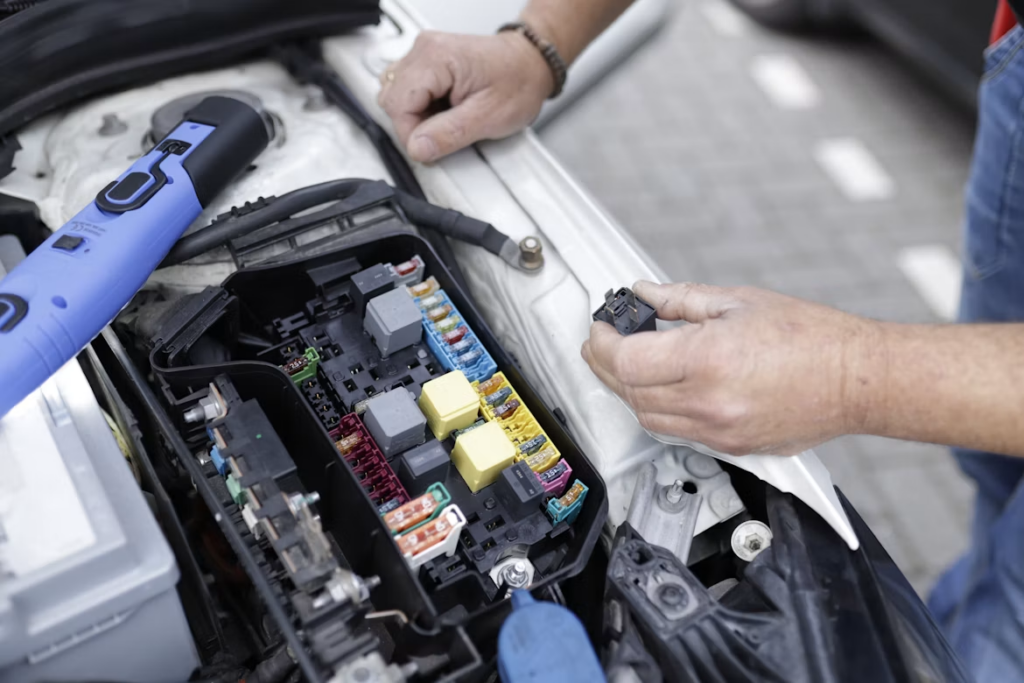
A log book service is maintenance carried out to your car manufacturer's exact schedule and checklist. Small log book fixes could involve oil and filter changes, fluid top-ups, brakes and tyre checks. Major log book repairs include spark plug changes and a full diagnostic scan.
Log book services can be carried out by any qualified mechanic, dealer, or independent repairer. The log book maintenance is deemed valid as long as the work follows the car manufacturer’s specification and uses parts of the right quality.
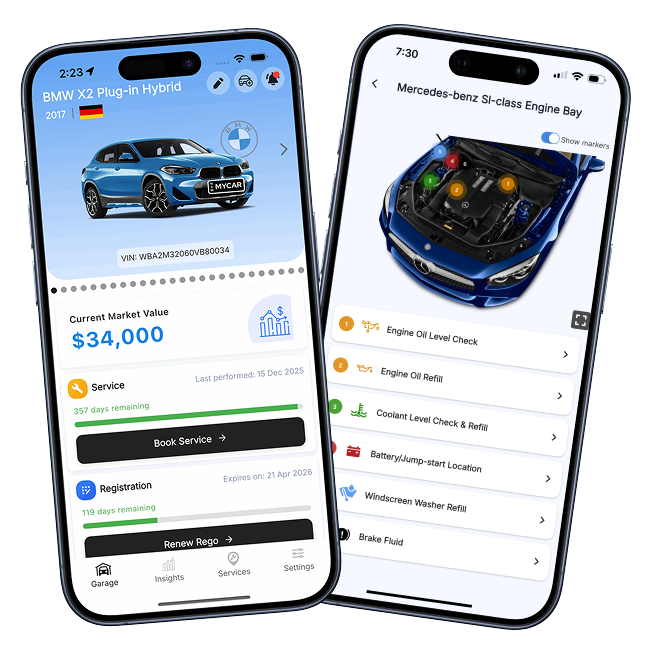
A tidy running record of log book services, on paper or in an app like Autoport, makes it easy to verify the scope of work done when your car warranty or resale value is on the line.
What Is a Log Book Service?
A log book service is the maintenance plan your car's manufacturer built into the warranty. A log book service means the same tasks, done at the same intervals, for every car of that model, exactly as your manufacturer set out when the warranty was written.
How It Differs From a Regular Service
A log book service follows a fixed schedule and checklist set by your car's manufacturer. A regular service is a flexible check-up the workshop tailors to your car's condition on the day, with no set interval behind it.

The differences between a log book service and a regular service across 7 parameters, from schedule and timing to parts, are outlined below.
| Log Book Service | Regular Service | |
| Schedule and Timing | Fixed intervals set by the manufacturer for your exact model | No fixed interval, booked whenever the car needs it |
| Purpose | Protects the warranty and your service history | General upkeep |
| Structure | Follows a set checklist end-to-end | Tailored to what the workshop finds on the day |
| Scope and Tasks | Specific checks and records tied to that interval | Essential maintenance tasks only |
| Documentation | Log book stamped/signed as proof of service | Usually just an invoice |
| Warranty Protection | Required to keep a new-car warranty valid | No warranty requirement attached |
| Parts | Must meet manufacturer specifications | No specification requirement |
Mixing a log book service and a regular one is where most car owners run into trouble. When a quick service skips an item the manufacturer’s schedule requires, the gap can turn into a warranty claim dispute later, even if you regularly service the car.
What’s Actually Checked at Each Interval
What’s checked at each log book service interval differs because your manufacturer’s maintenance plan ties specific tasks to your car’s age, distance travelled, and the scope of service. The first and second log book service visits won’t have the same checklist.

The tasks covered in a log book service across two intervals, such as major and minor services, are outlined below.
| Minor (Interim) Services: every 12 months or 10,000 to 15,000 km | Major services – every 20,000-60,000+ km or 1-3 years |
| Engine oil and filter change | Engine air filter and cabin filter replacement |
| Brake, coolant, power steering and washer fluid top-ups | Spark plug inspection or replacement |
| Visual check of brake pads, discs and lines | Brake fluid and coolant flush |
| Tyre tread, damage and pressure check | Belt, hose, steering and suspension checks, plus a computer diagnostic scan |
| Timing belt, fuel filter or transmission fluid at higher-mileage milestones (60,000 km, 90,000 km) |
Every log book service visit ends with a mechanic stamping your log book. This stamp becomes proof that you’ve adhered to the schedule.
Do You Have to Get It Done at the Dealer?
No, you don’t need to get your log book service done at the dealer. Only one in ten new car buyers have their cars serviced by an independent repairer, according to ACCC’s internal research. Most people are afraid that using anyone but the dealer will void their car warranty or reduce its resale value.
Your Rights Under Australian Consumer Law
The Australian Competition and Consumer Commission (ACCC) establishes that an independent repairer can sign or stamp your service log book without affecting your manufacturer’s warranty.

Any log book work must be done by qualified staff, to the manufacturer’s specifications, and using car parts of proper quality. ACCC recommends a mandatory scheme to ensure independent repairers receive the same technical information as the original dealers to carry out log book repairs.
How Much Does a Logbook Service Cost?
A A log book service typically costs $350 to $800. The total bill depends on your vehicle, the interval due, and where the workshop is.
- Minor or interim: $200 to $450
- Log book (standard): $350 to $800
- Major: $650 to $950, and often more for European and luxury cars
National averages sit lower, at around $245 for a minor service and $385 for a log book service. Averages hide a wide spread though, and newer cars, European makes, and metro workshops usually land above them.
Most new-car brands now publish a capped-price servicing schedule. A fixed maximum price per logbook visit for a set number of years or kilometres, regardless of which of their authorized dealers performs the service.

Under Toyota's Service Advantage program, a Corolla is currently capped at $245 per service, due every 12 months or 15,000 km. In total, you’re looking at $1,225 for a five-year total.
Ford's own Service Price Guide caps an MY2026 Ranger at $399 for each of the first five general services, for a total of $1,995 across 5 years or 75,000km. Same logbook service label, well over $700 apart in total cost.
How to Avoid Overpaying
The 5 methods that you can try out to avoid overpaying are outlined below:
- Ask for an itemised quote and check it against your car's own service booklet, rather than accepting a generic "logbook service" quote over the phone
- Question labour add-ons like a cabin air filter swap that takes about two minutes behind the glovebox
- Dismiss optional extras like fuel-system or engine flushes that aren't actually on the manufacturer's list for that interval
- Request the mechanic to leave replaced parts with you, so you can see what was actually changed
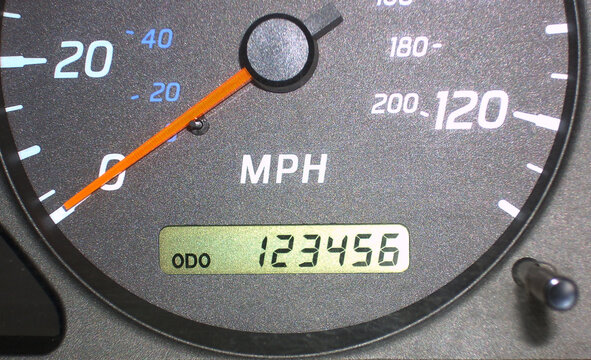
- Photograph your dashboard and fuel level before drop-off, so mileage isn't in dispute at pick-up
How Often Do You Need One?
A log book service is usually due every 12 months or 10,000 to 15,000 km, whichever comes first. Some vehicles, such as certain diesel 4WDs and utes, are set at every 6 months or 10,000 km.
Check your specific model’s schedule. Diesel and European performance cars require more frequent repairs due to their high performance.
Manufacturers also list severe driving conditions, such as short trips, stop-start traffic, and towing, as requiring shorter service intervals than standard.
TIP: Do not delay the interval, or you’ll lose your warranty.
What Happens If You Lose Your Log Book?
Losing your log book’s biggest risk is proving your service history. Thankfully, car ownership and registration aren’t affected, since they’re handled by your certificate of registration. However, you may lose proof at resale that you’ve followed the manufacturer’s schedule.
Here are four actions you can take if you lose your log book:
- Gather any proof you have: Collect photographs of stamped pages, service invoices, and receipts to cover the gap.
- Contact the workshops that serviced the car: Ask the dealer or independent workshop to send through your service history. Dealers can usually look up records using your VIN or rego number.
- Ask about a replacement or online record: Many dealers can order a replacement service book for your model, and some brands keep service history in an online portal you can log in to.
- Keep digital records: Install a tracker such as the Autoport app so you're not relying on paper that can be lost or damaged.
A learner driver log book is a different thing. If you've lost one of those, your state's transport authority handles the replacement.
FAQs
Here are 5 questions car owners ask related to log book services.
Will using an independent mechanic void my warranty?
No. The ACCC has confirmed that a qualified independent mechanic can carry out and stamp a logbook service without voiding your warranty, provided the work follows the manufacturer's schedule and uses parts of suitable quality.
What's the difference between a logbook service and a regular service?
A logbook service follows a fixed checklist set by your manufacturer for your exact model, done at set intervals (every 10,000km or 15,000km, for example), and gets stamped as proof.
A regular service is a flexible check-up the workshop scopes to your car's condition on the day, with no fixed interval and no warranty requirement attached.
The gap shows up most at higher-mileage intervals. A 60,000km logbook visit requiring spark plugs, a brake fluid flush and filter changes costs noticeably more than a regular service covering just oil, filter and a general inspection.
How much does a logbook service cost?
Around $350 to $800. It depends on your make, model, capped-price status, and which interval is due.
Nationally, Brand-specific capped-price programs vary even more. A Toyota Corolla is currently capped at $245 per service under Toyota's Service Advantage program, which is why checking your own model's capped price is more effective than assuming a if the national average applies to you.
What if I’ve lost my physical logbook?
The main risk is proving your service history at resale. Photos of stamped pages and receipts cover the gap in the meantime, and a digital record such as the Autoport app removes the problem going forward.
How often is a logbook service due?.
Most manufacturers set it at every 12 months or 10,000 to 15,000km, whichever comes first. A few, including some diesel 4WDs and utes, ask for every 6 months. Manufacturers also list "severe" driving conditions.
The Bottom Line
A logbook service is about following your manufacturer's schedule with the right part.. What actually protects your warranty and your resale value is the record of the work, kept consistently, whether that's stamped paper pages or a digital copy.
If keeping track of service dates and paperwork feels like a chore, that's exactly what Autoport is built for.
Our app can remind you before a service or rego renewal is due, keep your service history in one place, and help you find a qualified workshop nearby when it's time to book.